



Celebrating 12 years :
2014 - 2026
Call us:
+8801730591285
InitVent InitVent

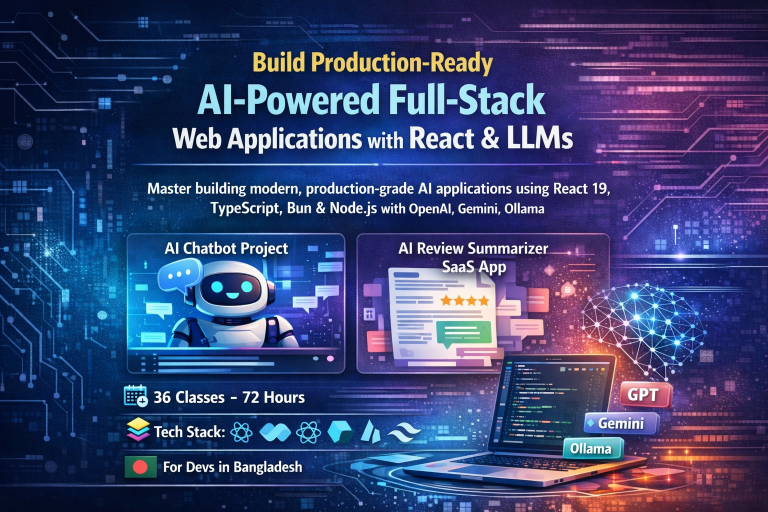
AI Engineering Course

AI Engineering Course

Our AI Engineering Course is a comprehensive program designed to empower learners with the essential technical and practical skills needed to design, build, deploy, and maintain robust AI systems in real-world environments. Whether you’re transitioning from software engineering, data analysis, or a related field, this course bridges the gap between theoretical AI knowledge and practical implementation. It emphasizes hands-on experience, ethical considerations, and scalable solutions, preparing you to tackle challenges in industries like healthcare, finance, autonomous systems, and more. The curriculum is modular, allowing flexibility for full-time professionals, and includes access to cloud-based tools, datasets, and collaborative projects. By the end, you’ll be equipped to contribute to AI-driven innovations and pursue roles such as AI Engineer, Machine Learning Engineer, or MLOps Specialist.

Our courses are tailored for:

  • Engineers and Developers: Those with a background in programming who want to specialize in AI integration.
  • Data Professionals: Analysts, scientists, or architects seeking to advance into AI system design and deployment.
  • Career Switchers: Individuals with STEM backgrounds aiming to enter the AI field, assuming basic programming familiarity (e.g., Python).

No prior AI experience is required, but proficiency in basic coding and mathematics (linear algebra, statistics) is recommended. The course duration is typically 12-16 weeks, with options for self-paced or instructor-led formats, and includes community forums for peer support.

Our Company Offers the Best Planning Solutions

Our company delivers top-tier planning solutions that cater to your unique business needs. We combine industry expertise with innovative strategies to ensure effective and efficient planning. Trust us to provide the best solutions for achieving your goals and driving success.

Fundamentals

Begin with core AI concepts and tools to establish a strong base. This phase covers programming essentials, data structures, and introductory AI/ML theory. You'll install environments (Anaconda, Jupyter), work with datasets, and complete mini-projects like a basic classifier. Duration: 3-4 weeks. Goal: Achieve confidence in foundational skills, with quizzes to track progress.

Advanced Topics

Dive deeper into complex AI engineering techniques, integrating components like deep learning, NLP, and computer vision. This step emphasizes algorithmic efficiency, parallel computing, and interdisciplinary applications (e.g., AI in IoT). Group discussions on research papers and advanced labs, such as fine-tuning transformers, help solidify understanding. Duration: 4-6 weeks. Goal: Master specialized tools and prepare for integration challenges.

Projects

Apply accumulated knowledge through hands-on, capstone projects that simulate real-world scenarios. Examples include developing an end-to-end AI system for image-based disease detection, a conversational AI agent, or an optimized recommendation engine. You'll collaborate in teams, use version control (Git), and present prototypes. Feedback loops incorporate industry best practices. Duration: 3-4 weeks. Goal: Build a portfolio showcasing deployable AI solutions.

Certification

Upon successful completion of projects and a final exam (covering theory, coding, and ethics), earn a verifiable certification. This includes a digital badge, resume guidance, and access to job placement resources. Optional extensions offer specialization tracks (e.g., AI ethics or edge AI). Goal: Validate expertise and boost career prospects in the competitive AI job market.

Frequently Asked Questions

What are the prerequisites for enrolling in the course?
While no prior AI experience is required, participants should have basic programming knowledge, preferably in Python, and familiarity with fundamental mathematics like linear algebra, calculus, and statistics. If you're new to these, we offer optional pre-course modules to get you up to speed. The course is ideal for those with a background in software development, data analysis, or related fields.
How long does the course take to complete, and is it flexible?
The standard duration is 12-16 weeks, depending on your pace. It's designed for flexibility, with self-paced options for working professionals, including recorded lectures and weekend live sessions. You can extend access if needed, and the modular structure allows you to focus on specific components like NLP or MLOps without completing the entire program upfront.
What kind of certification do I receive upon completion?
You'll earn a verifiable digital certificate from our platform, highlighting your skills in AI engineering, including hands-on projects and key technologies like TensorFlow, PyTorch, and Docker. This certification is shareable on LinkedIn and includes a skills badge. It's recognized by industry partners and can strengthen your resume for AI-related job applications.
What tools and resources are provided during the course?
We provide access to cloud-based environments (e.g., Google Colab, AWS), datasets from sources like Kaggle and UCI, and software tools including Python libraries (NumPy, Pandas, Scikit-learn), deep learning frameworks (TensorFlow, PyTorch), and MLOps platforms (MLflow, Kubernetes). You'll also get templates for projects, code repositories on GitHub, and a community forum for collaboration and troubleshooting.
What career opportunities can I pursue after finishing the course?
Graduates are well-prepared for roles such as AI Engineer, Machine Learning Engineer, Data Scientist, or MLOps Specialist in sectors like tech, healthcare, finance, and autonomous systems. The course includes career support like resume reviews, interview prep, and networking events. Many alumni report salary increases or job transitions, with skills in demand for building scalable AI solutions.
Cart (0 items)