


AI Automation Engineering: Benefits, Opportunities, and Why Businesses Need It Now
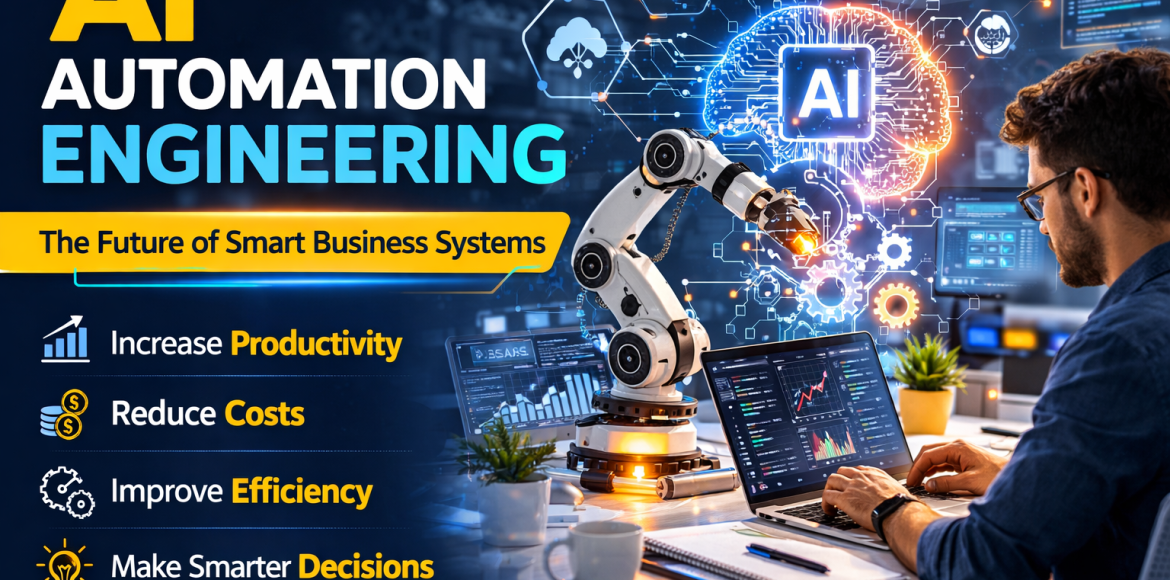
Artificial Intelligence (AI) is transforming the way businesses operate. From automating repetitive tasks to making intelligent decisions based on data, AI automation engineering is becoming one of the most valuable technological advancements in the modern digital economy. Organizations across industries are adopting AI-driven automation to increase productivity, reduce operational costs, and deliver better customer experiences.
In this article, we will explore what AI automation engineering is, its major benefits, and why companies should start investing in it today.
What is AI Automation Engineering?
AI Automation Engineering is the process of designing and implementing automated systems powered by artificial intelligence. It combines machine learning, data analytics, software engineering, and workflow automation to create systems that can perform tasks without constant human intervention.
These systems can analyze data, learn from patterns, and execute actions automatically. Examples include automated customer support chatbots, intelligent data processing systems, marketing automation tools, and predictive business analytics.
In simple terms, AI automation allows machines to think, analyze, and perform tasks that traditionally required human effort.
Key Benefits of AI Automation Engineering
1. Increased Productivity
One of the biggest advantages of AI automation is productivity improvement. Automated systems can perform repetitive tasks much faster than humans and without fatigue. Tasks such as data entry, report generation, and workflow management can run continuously.
This allows employees to focus on higher-value work such as strategy, creativity, and decision-making.
2. Reduced Operational Costs
Businesses spend significant resources on manual processes. AI automation helps reduce labor costs, minimize human errors, and streamline operations.
By automating routine tasks, companies can save time and money while increasing overall efficiency.
3. Improved Accuracy and Reduced Errors
Human mistakes are common in repetitive tasks. AI systems can perform these tasks with a high level of accuracy once properly trained.
For example, AI-powered systems in finance can detect calculation errors, while automated document processing tools can analyze thousands of documents without missing important details.
4. 24/7 Operations
Unlike human employees, automated systems do not require breaks or working hours. AI-powered platforms can run continuously, handling tasks such as customer support, monitoring systems, and processing transactions.
This ensures businesses can operate efficiently around the clock.
5. Better Decision Making with Data
AI systems can analyze massive datasets within seconds. This capability allows organizations to make smarter decisions based on data insights.
For example, AI can predict customer behavior, forecast sales trends, and identify operational inefficiencies.
6. Enhanced Customer Experience
Many businesses use AI automation to improve customer service. AI chatbots, automated email responses, and recommendation systems help provide quick and personalized support.
Customers receive faster responses, better recommendations, and more convenient services.
7. Scalability for Business Growth
As businesses grow, managing operations manually becomes difficult. AI automation systems can scale easily without requiring proportional increases in workforce.
This makes it possible for startups and growing companies to handle larger workloads efficiently.
Real-World Applications of AI Automation
AI automation engineering is used in many industries today:
Healthcare: AI systems help analyze medical images, manage patient data, and assist doctors in diagnosis.
Finance: Automated fraud detection, algorithmic trading, and financial forecasting.
E-commerce: Product recommendation systems, automated customer support, and inventory management.
Marketing: AI tools automate advertising campaigns, content recommendations, and audience targeting.
Manufacturing: Smart factories use AI to monitor machines and optimize production processes.
Future of AI Automation Engineering
The demand for AI automation engineers is increasing rapidly. As technologies such as machine learning, natural language processing, and robotic process automation continue to evolve, businesses will rely even more on intelligent automation systems.
In the future, AI automation will not only support human workers but will also become a core component of business strategy.
Companies that adopt AI automation early will gain a strong competitive advantage in the digital marketplace.
Final Thoughts
AI Automation Engineering is not just a technological trend; it is a strategic necessity for modern businesses. By improving efficiency, reducing costs, and enabling data-driven decision-making, AI automation empowers organizations to innovate and grow faster.
Businesses that invest in AI automation today will be better prepared for the challenges and opportunities of tomorrow’s digital economy.
Whether you are a startup, entrepreneur, or enterprise leader, understanding and implementing AI automation can unlock new levels of productivity and innovation.